Rooms
Every choice has a room, even when the room is only a shared document.
Risoi uses room as a practical word for context. A room can be a kitchen table, a board call, a studio wall, a product channel, or a private notebook. What matters is that choices gather there and leave traces: who speaks first, what gets postponed, what evidence is welcomed, and what kind of answer feels too expensive to mention.
Room notes are written to preserve context without turning it into gossip. They ask what the space rewards, what it punishes, and which objects or rituals make a better conversation possible. A timer, a shared margin, a visible constraint list, or a named pause can change the quality of a decision more than another slide.
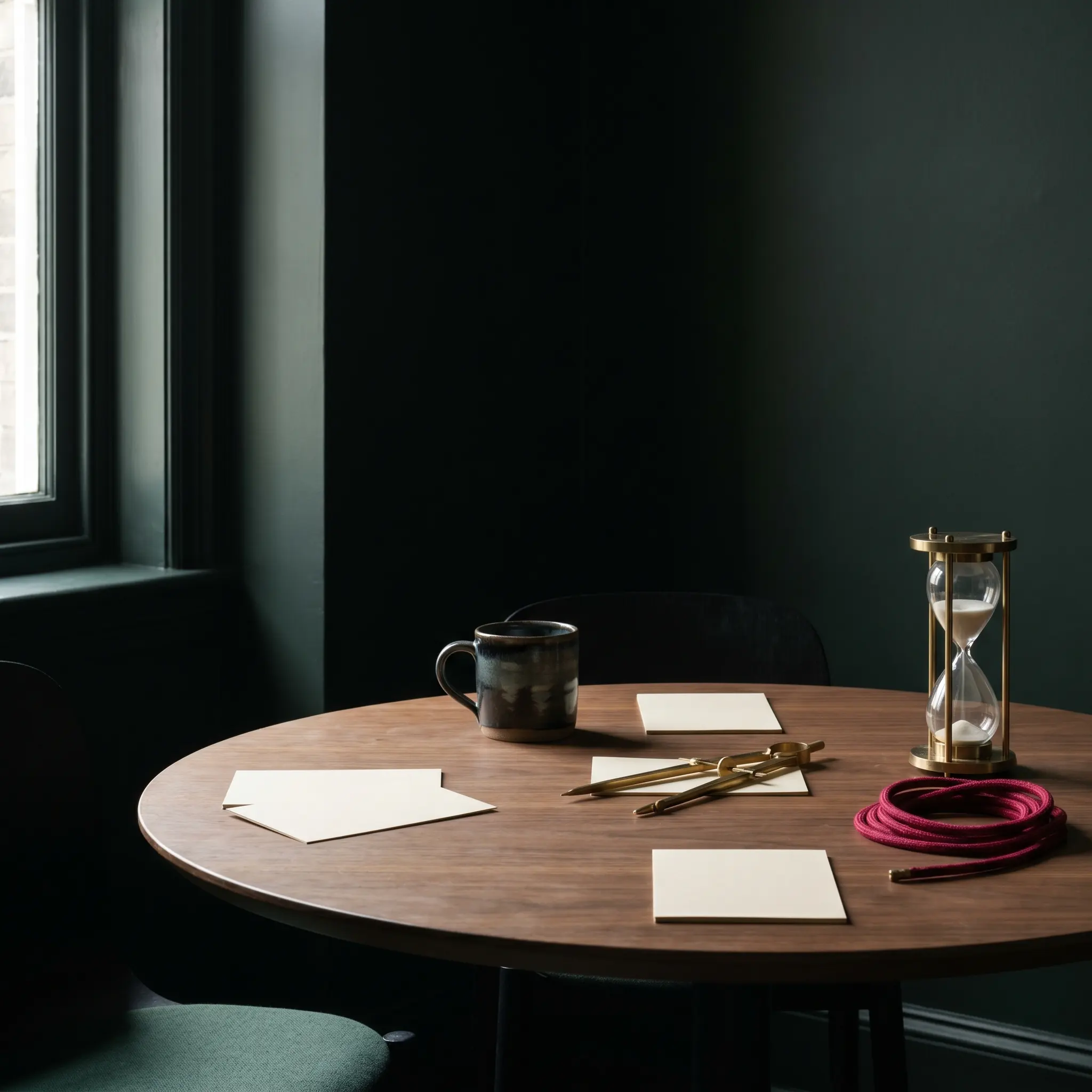
The open table
Used when everyone can still touch the assumptions. Notes stay visible, options stay plain, and the first task is to reduce fog.
The narrow corridor
Used when time or budget is closing. The note names what cannot be solved now and what must be kept reversible.
The repair bench
Used after a plan has caused avoidable strain. The note tracks responsibility, sequence, and the smallest repair that restores trust.
The quiet room
Used when people need privacy before precision. The note protects unfinished thought while still asking for a next honest sentence.