Signals
The quiet evidence has a tempo.
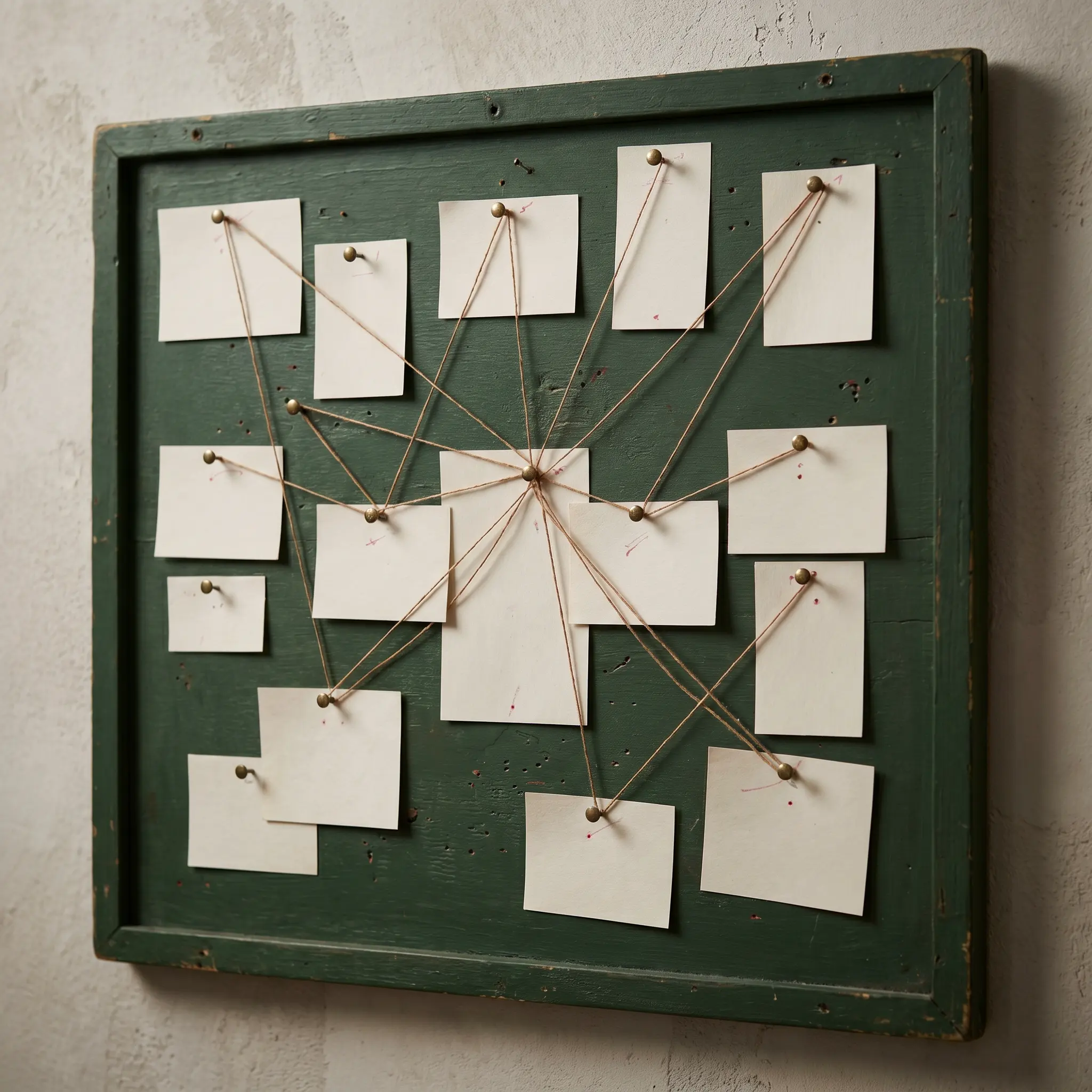
Risoi treats a signal as a repeated detail that changes the cost of a choice. It may be a sentence people keep editing out, a supplier delay that appears in every plan, a room that grows silent when one assumption is named, or a calendar pattern that proves the official priority is not actually protected.
Return
A signal becomes worth attention when it returns through different people or moments. Risoi asks whether the detail is a single irritation or a pattern that the plan keeps trying to hide.
Pressure
Pressure is not always danger. Sometimes it clarifies the real constraint. The note should identify whether time, trust, money, attention, or maintenance is the thing being spent fastest.
Translation
A useful signal can be retold without drama. It should help the next meeting ask a cleaner question, adjust a boundary, or hold one option open while evidence matures.
The Risoi method keeps notes close to the observable world. It avoids personality diagnosis, heroic rescue language, and forced certainty. The aim is not to win the room with a sharp opinion; it is to make the room more honest about what it already knows. When a signal is named well, people do not feel trapped by it. They can test it, disagree with it, or decide what would make it less true next week.